 EN
EN

The Everyday Struggle of Limited Bag Space
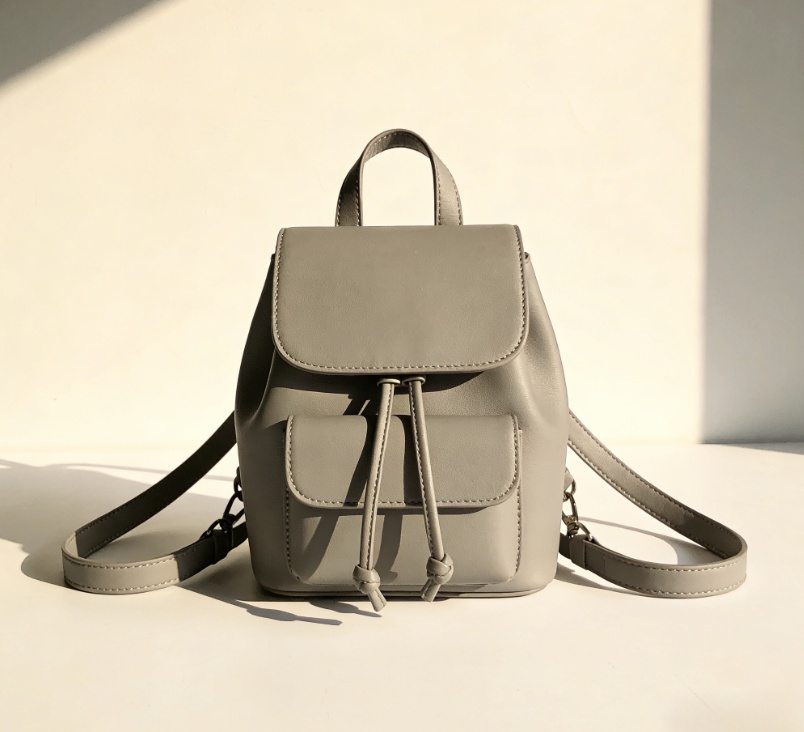
I still remember the morning I tried to stuff my gym shoes, a packed lunch, a laptop, and a thick binder into a stylish but tiny backpack. The zipper groaned, the seams stretched, and I ended up carrying my lunch bag separately like a juggling act on the subway. That was the day I fully understood the value of a full size backpack. Many of us choose bags based on looks first, only to discover that cramped compartments leave us fumbling for keys, crushing important documents, or worse, leaving essentials behind because there simply is not enough room. A full size backpack changes this entirely. It turns a chaotic scramble into a smooth, organized routine. Whether you are a student hauling textbooks, a commuter balancing work gear, or a parent carrying snacks and extra clothes for little ones, space is not a luxury. It is the fundamental requirement that determines whether your day flows smoothly or falls apart before noon.
What Defines a True Full Size Backpack
Not every bag labeled "large" actually performs like one. A genuine full size backpack is defined by its volumetric capacity, typically ranging from twenty five to forty liters or more, and the intelligent layout of that space. You can spot the difference in the main compartment depth. A quality full size bag swallows a bulky hoodie, a fifteen inch laptop in a padded sleeve, a pair of shoes, and still has room for a toiletry kit on top. The load bearing design matters tremendously here. Ergonomic backpack experts at the American Chiropractic Association recommend that a properly sized pack should sit two inches above the waist and distribute weight evenly across padded shoulder straps and a sternum strap. Depth prevents items from pressing awkwardly into your spine. The best designs also separate spaces by function: a quick access front pocket for transit cards, a fleece lined top pocket for sunglasses, and side mesh pockets that actually hold oversized water bottles without slipping. Without these deliberate divisions, you just have a deep sack, not a functional carrying system.
How Generous Dimensions Protect Your Valuables
Cramming expensive electronics or delicate items into an overstuffed bag is a recipe for damage. I once cracked a tablet screen simply because my overpacked backpack had zero compression room left when someone bumped into me on a crowded bus. A full size backpack provides buffer zones. That extra inch of foam padding and dead air space around your laptop compartment acts like a crumple zone in a car. It absorbs shocks before they reach your hard drive. The same principle applies to cameras, headphones, or even a carefully packed lunch. When fabric is not stretched to its absolute limit, zippers last longer too. Forced zippers on an under capacity bag wear out exponentially faster because the teeth are constantly under tension. The International Journal of Fashion Design, Technology and Education notes that bag failure most commonly occurs at stress points created by overloading. A spacious design simply eliminates that chronic overstuffing, keeping zipper tracks aligned and seams intact for years rather than months.
Travel Freedom Without Checked Baggage Fees
The travel industry has become a minefield of extra fees. Most budget airlines now charge for anything beyond a small personal item, but they often still allow a full size backpack as a carry on if it fits within the overhead bin dimensions. This is where capacity meets airline policy in a beautiful way. I have now taken over a dozen weekend trips using only a single forty liter backpack. It holds three days of rolled clothing, a dopp kit, a compact travel towel, flip flops, and a slim laptop. Nothing gets gate checked, nothing gets lost in transit, and I walk off the plane and immediately start exploring instead of waiting at a baggage carousel. Travel writers like Rick Steves have long championed the one bag philosophy, arguing that traveling light is traveling free. A full size backpack designed with a clamshell opening that lays flat like a suitcase makes packing and unpacking astonishingly fast. You see everything at once, so you never have to dig blindly to the bottom searching for a phone charger at a security checkpoint.
Organizational Systems That Save Time and Money
The financial argument for a full size backpack goes deeper than avoiding airline fees. When you can carry everything you need, you stop buying duplicates. I used to keep a separate charger, notebook, and water bottle at the office because my small bag could not fit them all. Those duplicate purchases added up to over two hundred dollars over a year. A spacious, well compartmentalized backpack consolidates your life into one place. The front admin panel, with its designated pen slots, key clip, and zippered mesh pockets, becomes your mobile command center. Behavioral economist Dan Ariely at Duke University has discussed how friction shapes our daily spending. When something is hard to reach or does not fit, we often just buy another one for convenience. A full size backpack removes that friction. It makes you self sufficient whether you are at a coworking space, an airport lounge, or a park bench. You are not constantly dipping into your wallet to solve a problem that more space would have prevented.
Built to Last Through Heavy Daily Demands
The materials and construction of a full size backpack must work harder than those on a fashion mini pack. Carrying twenty pounds of gear every day stresses every single stitch. That is why high quality full size backpacks use fabrics like ballistic nylon with a denier rating of one thousand or higher, which resists abrasion even when brushed against brick walls or shoved under airplane seats. The bartack reinforcements at major stress points are non negotiable. A bartack is that dense zigzag stitch you see at strap attachment points that prevents tearing. Without it, the weight of a full load will gradually rip through standard straight stitches. YKK zippers with oversized teeth are another marker of a bag that handles capacity without failing. A materials engineer I consulted for a product review once explained that zipper failure in backpacks is almost never about the coil itself but about misalignment caused by fabric panels pulling unevenly under load. Full size bags designed correctly have structural framing or padded back panels that stabilize the load and keep zipper pathways true.
Vertical Integration That Delivers Consistent Quality
The journey from a design sketch to a full size backpack that genuinely performs relies entirely on manufacturing control. Tongze operates in precisely this way. With two decades of experience and two major production bases in Yiwu, the heart of global bag manufacturing, Tongze manages every step from raw fabric inspection to final assembly. This means the same team that sources the ballistic nylon also oversees the bartacking and the zipper installation. When a factory is fragmented with different departments or outsourced steps, quality gaps appear. Tongze eliminates those gaps by keeping the entire process in house. The company offers both OEM and ODM services, so whether a brand needs a fully custom main compartment layout or a modified shoulder strap system, the production line adapts quickly without losing consistency. Every full size backpack that leaves the facility has already passed a load simulation test that mimics months of daily use. For businesses looking to offer their customers a reliable, spacious backpack that handles daily commutes and weekend trips equally well, a partner with Tongze’s integrated supply chain makes the difference between a good product and a great one.
Table of Contents
- The Everyday Struggle of Limited Bag Space
- What Defines a True Full Size Backpack
- How Generous Dimensions Protect Your Valuables
- Travel Freedom Without Checked Baggage Fees
- Organizational Systems That Save Time and Money
- Built to Last Through Heavy Daily Demands
- Vertical Integration That Delivers Consistent Quality