 EN
EN

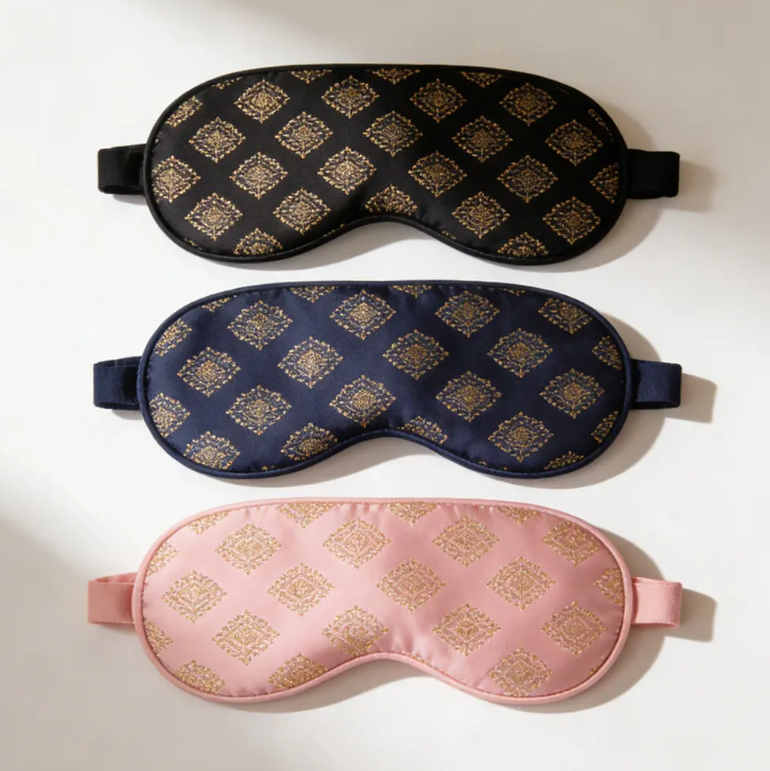
How Light Disrupts Sleep Before You Even Notice
The human body runs on a daily rhythm that depends heavily on light exposure. A small cluster of cells in the brain called the suprachiasmatic nucleus uses light signals from the eyes to decide whether it is day or night. When light hits the retina after dark, it suppresses melatonin production, the hormone that signals the body to wind down. Even a small amount of light, such as a streetlamp through a curtain or the glow of a phone screen, can be enough to delay sleep onset and reduce sleep depth. An eye mask blocks that light at the source. It is a simple intervention, but it addresses one of the most common environmental causes of poor sleep, especially for people who live in cities, work night shifts, or travel across time zones.
Why Silk Specifically Works Better Than Many Alternatives
Not all eye masks are equal, and the material matters more than most people expect. Silk has several properties that make it well suited for this use. It is naturally smooth, which reduces friction against the delicate skin around the eyes and minimizes the risk of waking up with creases or irritation. Silk is also breathable, so it does not trap heat and moisture the way some synthetic fabrics do. That breathability matters for comfort during the night, since a hot mask gets pulled off unconsciously. Silk is lightweight, which means the mask does not press heavily on the face, and it drapes well, which helps it conform to the contours of the nose and cheeks without leaving gaps where light can enter. The table below compares common eye mask materials.
| Material | Light Blocking | Breathability | Skin Comfort | Durability | Relative Cost |
|---|---|---|---|---|---|
| Silk | Good with proper design | Excellent | Excellent | Good with care | High |
| Cotton | Good | Good | Good | Good | Low to medium |
| Polyester satin | Moderate | Fair | Moderate | Good | Low |
| Memory foam | Excellent | Fair | Good | Moderate | Medium |
| Microfiber | Good | Good | Good | Good | Low |
The pattern is that silk sits at the top for comfort and breathability, while other materials may block light well but fall short on the sensory experience.
The Design Details That Determine Whether It Actually Blocks Light
Material alone does not block light. The design does. A silk eye mask that fits loosely will let light in around the edges, no matter how good the fabric is. Several design elements matter.
-
A contoured shape around the nose bridge, which prevents the gap that lets light through.
-
Adjustable straps that keep the mask in place without pressing too hard.
-
A width that covers the full eye socket area, not just the eyelids.
-
A lining or inner layer that adds opacity without adding heat.
-
Stitching that does not create pressure points against the face.
A sleep researcher once pointed out that most eye mask failures are fit failures, not material failures. A well fitted cotton mask will outperform a poorly fitted silk one. That is why trying a mask, or choosing one with adjustable sizing, matters so much.
The Sensory Experience and Why It Affects Sleep Onset
Comfort is not a minor consideration. Falling asleep depends on the nervous system shifting into a parasympathetic state, and physical discomfort keeps the body alert. A mask that feels scratchy, hot, or tight will keep the wearer aware of it, which is the opposite of what is needed. Silk feels cool and smooth against the skin, which is a subtle but real contributor to relaxation. That tactile difference is why many people who have tried both cotton and silk tend to prefer silk for nightly use, even though it costs more. The sensory experience is part of the product's function, not a luxury add on.
A Case Where the Right Mask Changed a Sleep Pattern
A frequent business traveler who crossed multiple time zones each month described struggling with sleep in hotel rooms. Blackout curtains helped, but light still came in around the edges, and the traveler often woke at three or four in the morning unable to fall back asleep. After switching to a contoured silk eye mask with an adjustable strap, the wake ups became less frequent. The traveler reported falling back asleep more easily after the initial waking, which is often the hardest part. The change was not dramatic in the sense of adding hours of sleep. It was a small improvement in sleep continuity that made a noticeable difference in how the following day felt. That is a realistic outcome for a simple intervention.
Where an Eye Mask Has Honest Limits
An eye mask is not a cure for insomnia, sleep apnea, or other clinical sleep disorders. Those conditions need professional evaluation and treatment. An eye mask addresses one specific factor, which is light exposure, and it works best as part of a broader sleep routine that includes consistent timing, reduced screen use before bed, and a comfortable sleep environment. It also cannot compensate for noise or an uncomfortable mattress. For shift workers and travelers, the benefit tends to be more noticeable because their light exposure is often poorly timed relative to their sleep schedule. For people with already good sleep hygiene, the improvement may be marginal. Setting expectations realistically keeps the product useful rather than disappointing.
How Manufacturing Experience Supports Product Quality
An eye mask is a simple product, but the details that make it work well, such as fabric quality, stitching, and fit, depend on manufacturing discipline. Backpack Source Factory has been producing custom accessories and bags for two decades, operating as a BSCI audited facility with Disney approval, Walmart ID, and Target ID. Experience with US and EU testing standards including CPSIA, REACH, and EN 71 means material safety and quality are handled systematically rather than left to chance. For brands developing sleep accessories that need to meet retail requirements, that combination of manufacturing experience and compliance knowledge is what makes a simple product reliably good.
Table of Contents
- How Light Disrupts Sleep Before You Even Notice
- Why Silk Specifically Works Better Than Many Alternatives
- The Design Details That Determine Whether It Actually Blocks Light
- The Sensory Experience and Why It Affects Sleep Onset
- A Case Where the Right Mask Changed a Sleep Pattern
- Where an Eye Mask Has Honest Limits
- How Manufacturing Experience Supports Product Quality